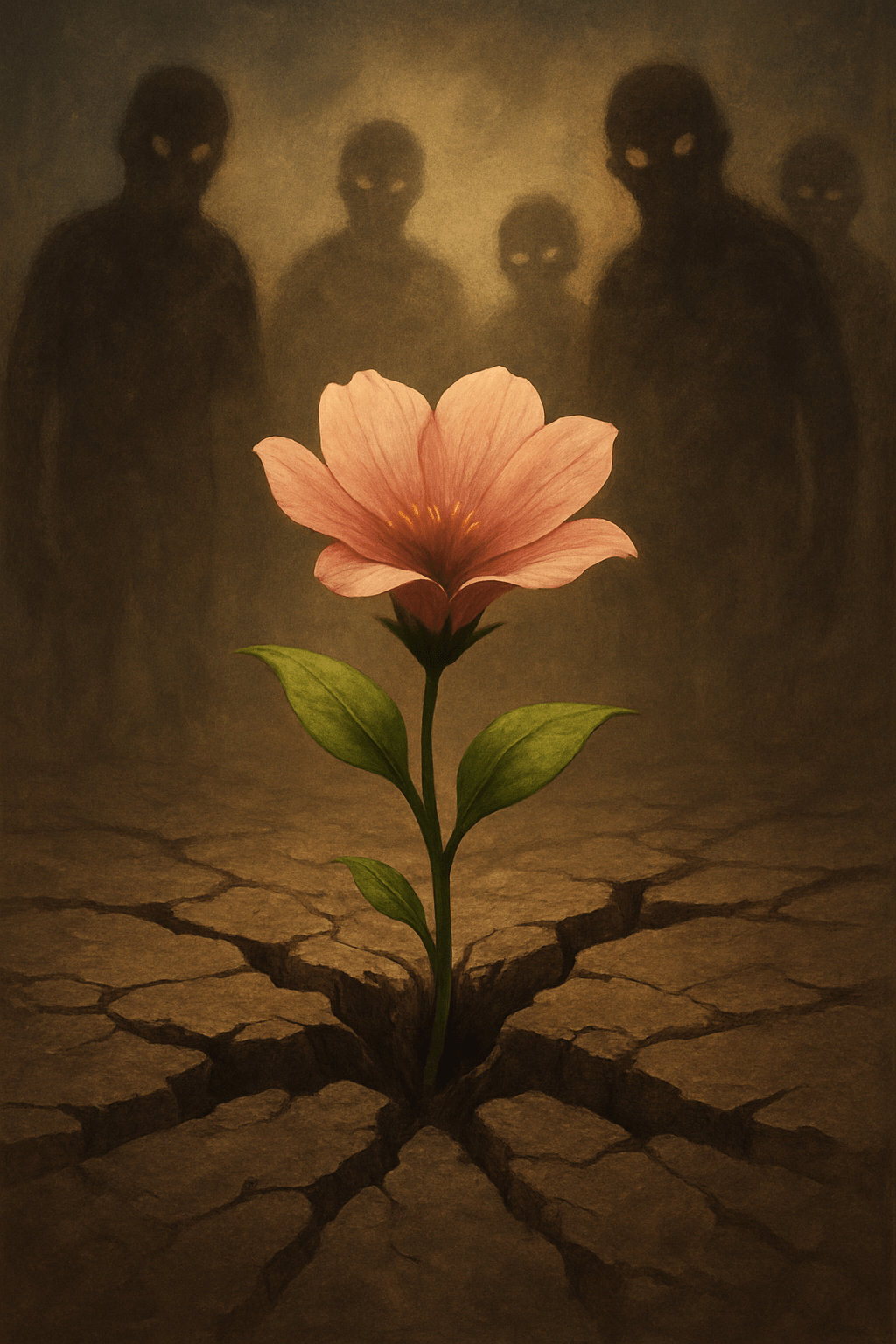
I was in my office, scrolling through social media between meetings, when I saw a post that stopped me mid-scroll. It wasn’t flashy or long. Just one line, tucked between photos and announcements:
“You either face your demons or they raise your children.”
I stared at it. Read it again. And again.
Outside my window, the hum of the processing plant mingled with the layered sounds of traffic and nature. Trucks rumbled past on the highway in the distance. Birds called out from the trees that line the hillside to the east. The world moved on as usual, unaware that something inside me had gone still.
That sentence settled in quietly. It lingered.
I have watched what happens when demons go unchecked. Not in storybooks or headlines, but in the lives of people doing their best with what they were handed. I have seen fathers with tender hearts and short tempers, raising their voices without knowing why. I have seen mothers worn thin by stress, reacting more than responding, repeating patterns they once feared. I have seen children learn to walk through the world carefully, trying not to wake what no one wants to name.
Not all demons look like monsters. Some wear uniforms. Some smile in family photos. Some show up in silence around the dinner table, or in rules that shift with emotion. Others carry the weight of addiction or linger in the memory of abuse. Many hide in unspoken pain, wounds passed down through generations with no name and no apology.
Emotional pain is not the only burden families inherit. For many, those wounds are woven into something deeper: poverty.
Poverty is not just the absence of money. It is the presence of constant worry.
It is the heaviness of never quite having enough: food, time, rest. I have seen how poverty wraps itself around families like a net, tightening with every unpaid bill and each decision made from fear rather than freedom. It teaches parents to survive instead of thrive. It teaches children to quiet their needs. It plants seeds of helplessness that grow into quiet resignation. The belief that nothing will ever really change can settle deep into the bones of a family if no one interrupts it.
I once watched a young mother, barely out of her teens, explain to her daughter why she couldn’t go on a field trip. Rent was due. Groceries were low. There were no extras. The daughter didn’t cry, but her shoulders dropped in that way children do when they learn not to ask. The mother’s eyes filled with frustration, not from anger, but from the ache of knowing she was handing her daughter the same weight she once carried.
That is how the past begins to parent the present.
You either face your demons, or they raise your children.
Unprocessed pain repeats itself. Buried trauma grows roots. When survival is the only goal, love often grows quiet. Unless someone chooses to interrupt the pattern, the cycle continues, generation after generation.
But I have also seen what happens when someone decides to do the hard work of healing. When a parent stops mid-sentence and chooses a gentler tone. When someone steps into therapy to understand their reactions. When truth is named, even when it shakes. When they say, with quiet courage, “This is where it ends.”
Healing is not always loud. Sometimes it is quiet and steady, like water softening stone. Sometimes it looks like a parent holding a child longer than necessary. Sometimes it sounds like whispered prayers, gentle apologies, or brave boundaries.
Addiction. Abuse. Neglect. Control. Silence. Scarcity. These are not just private struggles. They are inherited patterns. And unless someone chooses to interrupt them, they pass themselves on without permission.
But grace makes room for interruption. And courage makes it possible.
I have watched the difference unfold in homes where honesty is practiced. Where children are allowed to feel, not just obey. Where mistakes are met with compassion and correction, not fear. Where love is steady and unconditional.
No one has to be perfect. But we all have the power to be present.
To choose awareness over autopilot.
To trade reaction for reflection.
To respond with softness, even when life has hardened us.
The demons of past generations do not have to raise our children.
We can choose differently.
And when we do, we stop the past from parenting the present.
Every time we choose truth, healing, and grace, we interrupt the cycle. We make room for something new. We make room for peace. We make room for restoration. We make room for wholeness.
And that, I believe, is sacred work.
 In the quiet
Leave a comment