I hear it often: “You two are perfect together.” And while I would never argue against the depth of love we share, I also know marriage is not built on perfection. It is built on grace, on missteps and course corrections, on learning to begin again when we do not get it right the first time.
And in that truth, I can say this with honesty: my husband is my best friend. But I have not always spoken life over our relationship. There have been seasons when my words reflected weariness more than love, and in those moments, I was slow to see how much weight they carried.
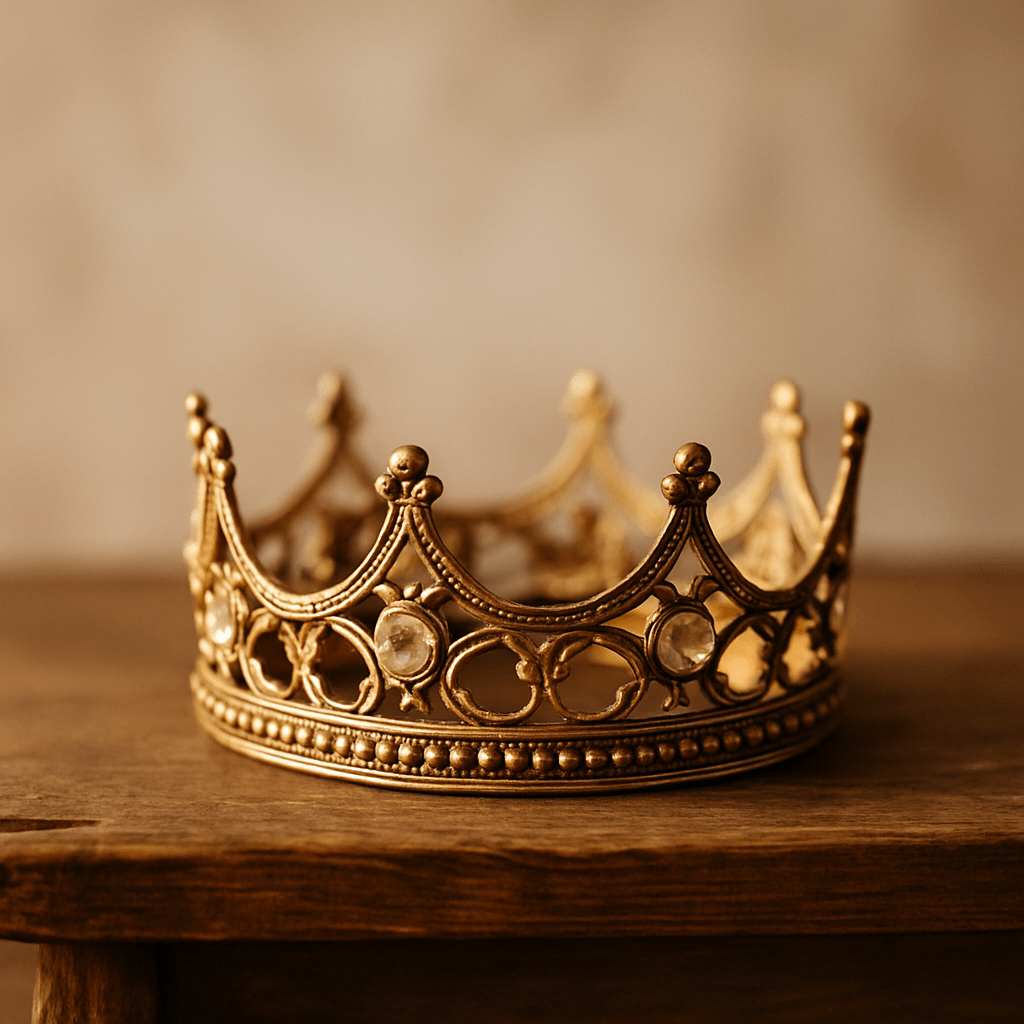
That realization came back to me when I heard a pastor share a message that has stayed with me. He said that if you take the crown from a king’s head, you cannot tell him from any other man. But a wife who speaks highly of her husband, who honors and builds him up, becomes his crown.
It is a striking image, because a crown does not change the man beneath it, but it does change how the world sees him. And it made me think about my own words, the power they hold, and the way they shape the one I love most. The sermon brought me back to the early days of my marriage.
We were young parents, still learning the nuance of a blended family, still figuring out each other’s routines and rhythms. Those years were tender but also stretching, filled with late-night feedings and mornings that started too soon. I can still see myself at the kitchen table, bills stacked high, the sound of little feet in the background, venting my weariness about my husband in moments when I should have held back. At the time it felt harmless, but looking back, I see how those words did not reflect the love I truly felt. They chipped away at his dignity instead of strengthening it.
Over time, I realized why. Criticism comes easily when life feels overwhelming. I can still picture the weariness on his face some evenings, the way his shoulders sank a little lower when my words cut sharp, and how the air in the room seemed heavier after I spoke. Yet I have also seen how encouragement softens his eyes, how laughter returns, and how even the quiet between us feels lighter when words carry hope.
And it shows up not just in what we say, but in the gestures that seem small at first glance. When a wife speaks highly of her husband, when she reaches for his hand in a crowded room and feels his grip steady her, when she leans in close and listens as his voice cuts through the noise, she honors him. In those ordinary moments, she places the crown on his head for the world to see.
I think about this often when I hear how marriage is described today. It is so often framed as independence, as though love is a balancing act of who gives more or who holds the upper hand. But keeping score only cheapens what was meant to be built on trust. Marriage is not about competition, it is about unity. It is two people bringing both their strengths and their shortcomings to the same table and deciding, again and again, to carry life together.
And within that unity, a wife becomes her husband’s crown not by losing herself, but by choosing to love in a way that draws out the best in him. And when both choose encouragement over criticism, marriage reflects its truest form, not perfect or polished, but steady and enduring.
Perhaps that is the real beauty of love. Not perfection, but two people learning to lift each other higher than they could ever stand alone. What would change in our homes, in our marriages, if we became slow to criticize and quick to encourage? If our words clothed one another in dignity, not just in grand gestures, but over morning coffee, in the rush of daily routines, and in the soft whispers that close a long day?
 In the quiet
Leave a comment