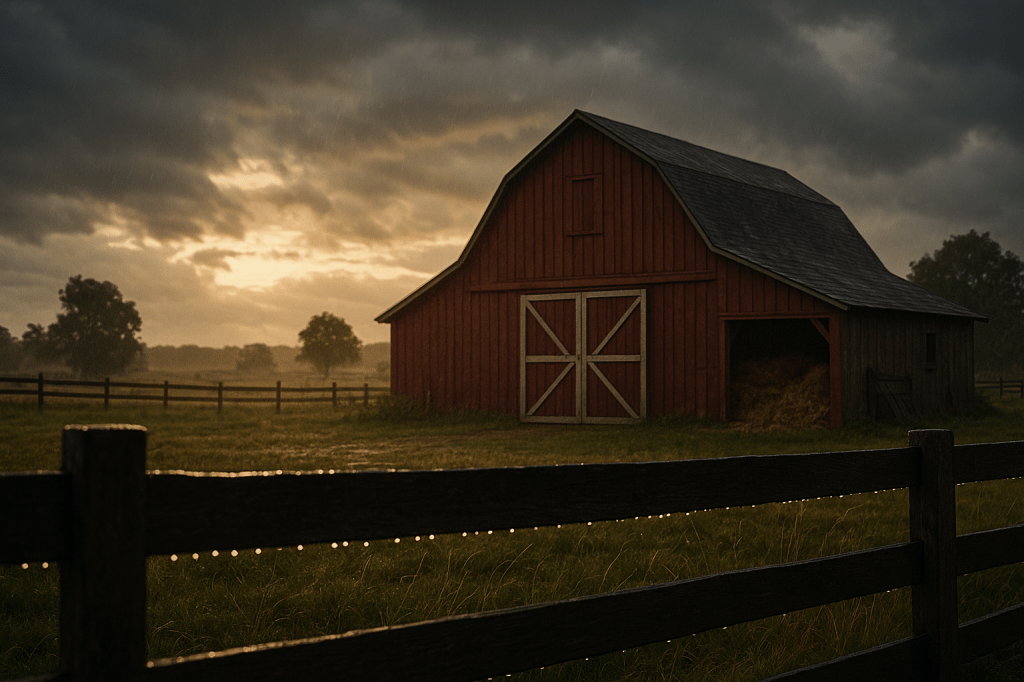
There is an old story about a farmer who needed help tending his land. He interviewed a young man and asked for his qualifications. The answer surprised him. “I can sleep through a storm,” the young man said. It seemed unusual, but the farmer, needing help, offered him the job.
Not long after, a storm rolled in with violent winds and heavy rain. The farmer woke in the middle of the night, his thoughts swirling with worry: the hay scattered across the fields, the shutters torn loose, the animals frightened and unprotected. Thunder echoed across the hills, rain pressed against the windows, and the wind rattled the barn doors. He hurried to wake the new farmhand, but the young man slept peacefully, unbothered.
With unease pressing on him, the farmer rushed outside. To his surprise, everything had already been tended. The shutters were secured. The hay was covered. The tools were stored away. The animals rested safely in their stalls. All was in order.
That was when the farmer understood. The young man had learned to prepare in calm seasons so he could rest when storms arrived. He could sleep through a storm because the work was already done. Perhaps the peace he carried is the peace we long for ourselves: the assurance that what matters most is already held steady.
Preparation is rarely dramatic. It often happens in quiet, unseen ways. The farmhand’s confidence was not built in one night, but in the long rhythm of ordinary days: fastening shutters while the skies were clear, stacking hay before clouds gathered, walking through the stalls to make sure every latch was closed.
On bright afternoons, when sunlight stretched across the fields and the air was still enough to hear the hum of insects, preparation was there too. The animals grazed peacefully, the barns stood secure, and the farmer’s land gave no hint of the wild night to come. Yet even then, the work of readiness mattered.
Our lives invite the same kind of steady attention. Perhaps preparation begins with small prayers whispered before our hearts are desperate for answers. It may look like choosing forgiveness while the wound is still fresh and tender, so bitterness never finds a foothold. It may be setting aside a little when times are good, so there is something to lean on when times grow lean. It may be practicing patience in small irritations, so we are not undone in larger storms.
Each small choice carries weight. Each is its own fastening of a shutter, the scrape of wood against wood. Each is its own stacking of hay, the heft of straw secured against a barn wall. These choices may seem ordinary, yet together they build the peace that steadies us when life turns.
The storms will come. Some will gather on the horizon, giving us time to brace ourselves. Others will rush in without warning. Preparation will not stop them, but it can change the way we endure them. The peace that allows us to rest in crisis is rarely found in the storm itself; it is planted in the ordinary soil of everyday choices, long before the first winds rise.
To sleep through a storm is not careless. It is a quiet confidence, born of preparation and nurtured by trust. It is the kind of peace that settles over us like steady rain on a roof, reminding us that even in the fiercest winds, we are not without shelter.
And maybe the question for us is not whether the storms will come, but what we are tending now, while the skies are calm.
 In the quiet
Leave a comment