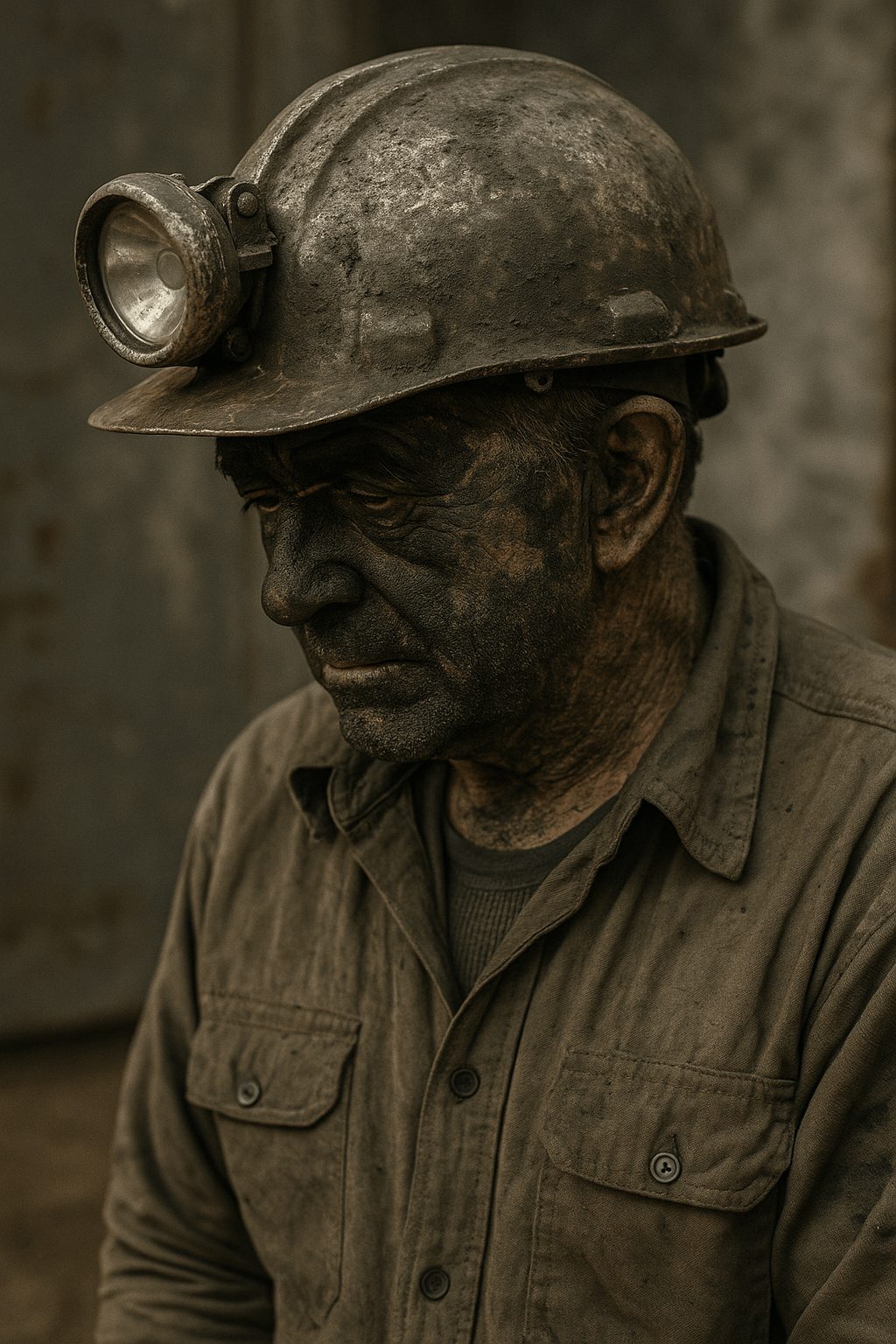
From the hollers of Barbour and Randolph Counties, they moved, one by one, brothers answering the call of black diamonds and the quiet promise of something steady. Coal was more than a job. It was survival. It was inheritance. A trade passed down like a prayer whispered underground.
For three generations, the Corley men mined coal. Grandfathers, fathers, and sons disappeared before daylight and returned long after dusk. They came home with dust smeared across their faces, pale rivers of sweat cutting through the soot. Their overalls were stiff with grime, their boots heavy, their backs bent from crawling beneath timbered ceilings.
Bathwater turned black before it turned cold. The sting of soap on scraped knuckles was a familiar burn. The air underground was thick with diesel, damp earth, and the sour tang of sweat. It clung to their skin, settled in their lungs, and followed them home in every breath.
Wives fought a quiet battle against it. Sheets were washed daily, yet the residue remained. No matter how many baths they took, the black always came back. Mattresses bore the outline of men long after they had gone, shadows carved into fabric and foam. Even in sleep, coal clung to them.
The Corley brothers didn’t scatter far. They built homes within sight of one another, where porch lights flickered through the trees at dusk. Tools were shared. Gardens bordered. Children passed through each other’s kitchens as easily as their own. They weren’t just neighbors. They were kin by more than blood.
They built lives on wages earned with blood and breath, carving homeplaces with calloused hands and borrowed hope. Coal paid for land and groceries and doctor bills. But it also exacted its price, etched in their spines, their lungs, and the quiet between men who had seen what the dark could do.
Their weeks ran on MAD shifts: midnight, afternoon, daylight. Rotating every seven days until time lost its shape. They slept when they could, kissed their children in every shade of sky, and ate when their stomach allowed. But even that rhythm wasn’t promised. Each morning, they listened to the radio, waiting to hear if their mine was called. If it wasn’t, there was no paycheck, just another day of waiting and stretching what little they had to make ends meet. The list was short, but it carried the weight of survival. Work wasn’t promised. It was prayed over.
They endured roof collapses, gas pockets, and silence so deep it made their ears ring. Sometimes the only light came from their helmets. Before batteries and bulbs, it was carbide lamps that lit the way, spitting sparks and burning just bright enough to hold back the dark. Machinery groaned. The walls wept. Still, they showed up. Not for glory, but for groceries. For mortgages. For the sound of supper on a cast iron skillet.
Wildcat strikes and layoffs left holes in more than their paychecks. When things got lean, they couldn’t always help each other with money, but they showed up anyway. A ride to town. A warm plate. A steady knock at the door. It wasn’t about charity. It was about not letting each other fall too far.
Back home, porches creaked under waiting feet. Children pressed against screen doors, listening for the rumble of tires. Supper was kept warm. Hearts stayed caught between hope and worry. No one spoke much of the danger. They just packed their tins, kissed their babies, and went. They trusted one another. And they trusted the shift to end the same way it started, with breath.
The mines paved the way for sons to dream of something different. But even those who left never truly left. Coal lingered in memory, in the creak of a lunchbox hinge, in the curve of a spine, and in the hush that follows the word remember.
Mitch never entered the mines, but he carries them with him. Not the black diamonds themselves, but the character they shaped. The humility. The quiet strength. The endurance.
He still hears the voices from the picket lines, cracked with cold and resolve. He remembers the feel of cardboard softening in his small hands, the grit of gravel under his shoes, the smell of burnt coffee passed between thermoses. His father and uncles stood beside him, silent and sure. Their presence said more than words ever could. They weren’t just fighting for wages. They were defending a way of life carved in stone and smoke.
Mitch and his brother Nathan were among the first Corley men to take their work above ground. That opportunity was paid for in soot and sacrifice. And now, the legacy lives in how Mitch shows up, in how he teaches his children that honor is often unspoken and always earned.
In the Corley family, legacy was forged underground. Not loud or glamorous, but steady and worn. Passed from miner to child like a lantern in the dark. The men gave their strength to the earth, and the earth kept the memory. It is written in the dust and carried in the breath of those who remember.
Most of their boots now rest by back doors, retired from the shift. But one Corley still walks into the dark. Faith Corley, a daughter of the line, carries the legacy forward. Her hands now carry what theirs once held, steady and sure like the ones who came before her. And through her, the soul of this family’s story still echoes underground.


 In the quiet
Leave a reply to Jonay Kelly-Corley Cancel reply